
Face Search Revolution
Why 2025 Will Be the Breakout Year for Facial Recognition Technology
NEW
11/27/20256 min read


The Rise of Face Search: Why It's Trending Now
Face search technology has been quietly developing for years, but 2025 marks its true breakthrough moment. The facial recognition market reached nearly seven billion dollars in 2024 and is projected to expand to almost eight billion in 2025, representing growth exceeding 14 percent annually. This isn't just incremental improvement—it's explosive growth driven by real-world demand.
So what changed? Three major factors converged to make face search mainstream in 2025.
First, artificial intelligence reached a tipping point. Deep learning techniques, particularly convolutional neural networks and emerging capsule networks analyze facial features with unprecedented detail, identifying even the subtlest facial characteristics. Modern systems can now achieve accuracy rates exceeding 99.5 percent, making them more reliable than many traditional identification methods. The technology finally works well enough for everyday use.
Second, the infrastructure caught up with the ambition. TSA rolled out facial recognition to 25 major airports by late 2025, lowering average passenger verification time to eight seconds. When you can breeze through airport security in less time than it takes to tie your shoes, people notice. Convenience sells, and face search delivers convenience at scale.
Third, the applications exploded beyond security. Retailers use it to prevent organized crime. Banks deploy it for seamless authentication. Fifteen of the top 50 US grocers now use facial recognition to flag repeat offenders and detect employee–customer fraud. The use cases multiplied from "interesting technology" to "essential business tool" practically overnight.
Why Face Search Will Dominate 2025-2028
The boom happening now is just the beginning. Multiple market forecasts predict sustained double-digit growth through 2028 and beyond, with some projections showing compound annual growth rates of 16.79 percent expected between 2025 and 2031. This isn't hype—it's backed by fundamental shifts in how we verify identity and search for information.
Consider the practical advantages driving adoption. Traditional passwords are forgettable. Physical IDs are losable. Your face? It's always with you. 68 percent of users already employ facial verification to unlock devices, and 42 percent access banking services through facial authentication systems. Once people experience the convenience, they rarely go back.
The technology is also getting frighteningly good at its job. Advanced liveness detection techniques can accurately distinguish between real users and fraudulent attempts using AI-generated faces through real-time micro-expressions, skin texture, and depth perception analysis. Even deepfakes and sophisticated spoofing attempts are being detected and blocked. As security improves, trust increases, and adoption accelerates.
Internationally, the technology is spreading even faster. UAE's biometric ID will replace plastic cards across banking, healthcare, and public portals, with Dubai Airport planning passport-free travel that links passengers' faces to boarding and retail wallets. Entire nations are betting their digital infrastructure on face recognition. This creates network effects—the more places that accept facial verification, the more valuable the technology becomes to users.
Why People Will Pay for Face Search Services
Here's where it gets interesting: face search isn't just about unlocking phones. Everyday people are discovering powerful reasons to pay for specialized face search services, and the market is responding with platforms ranging from free tools to premium subscriptions.
The core value proposition is simple but powerful: find where any face appears online. Parents want to monitor if their children's photos are being misused. Professionals need to audit where their images appear across the web. Content creators want to track unauthorized use of their likeness. PimEyes offers face search services for $29.99 a month, providing what it describes as a potentially dangerous superpower.
Several platforms have emerged as leaders in consumer face search. PimEyes uses face recognition search technologies to perform reverse image search and goes through the Internet to find pictures containing given faces, focusing on the face rather than the whole picture. Google's reverse image search offers basic capability at no cost. Yandex Images excels in accuracy and versatility, offering face recognition capabilities ideal for identifying individuals in photos and detecting modified images.
The premium tier makes sense because accuracy matters. Free tools might find obvious matches, but paid services dig deeper. They scan more sources, update more frequently, and deliver results faster. When someone's reputation or safety is on the line, people pay for thoroughness. Premium features include alert systems that notify users when their face appears in new online locations, and removal services that help scrub unwanted images from external websites.Write your text here...
The Adult Content Factor: The Silent Growth Driver


Let's address the elephant in the room: adult content is quietly driving massive adoption of face search technology. This isn't comfortable to discuss, but it's a significant market reality that will fuel growth through 2028.
Adult content creators and influencers have exploded across platforms like OnlyFans, Instagram, and TikTok. The phenomenon has created a curious challenge—fans see appealing faces in photos or videos but have no way to identify who they're looking at. Traditional search engines fail here. You can't Google a face you don't have a name for.
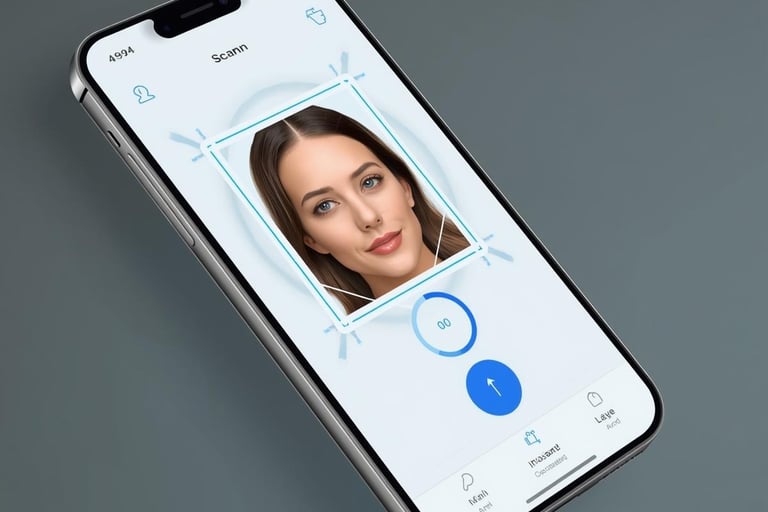
This is where specialized face search platforms found their killer app. Platforms like PimEyes, Google Images, Yandex, and emerging competitors discovered that adult content identification generates significant traffic and revenue. Users upload a screenshot or photo, the AI scans the image for facial features, and within seconds returns potential matches from across the internet—including social media profiles, public websites, and other content.
The demand is enormous and growing. Adult influencers are becoming mainstream celebrities, but unlike traditional celebrities, their real names aren't always public or easily searchable. Fans want to find more content from creators they discover casually. Content pirates want to identify performers to scrape additional material. Researchers and journalists need tools to verify identities in their investigations.
Current platforms handle this use case reasonably well, but they're not optimized for it. This creates a massive opportunity for a new platform entering the 2025-2028 window with better technology specifically designed for rapid facial identification. Imagine a service that delivers results in two to three seconds instead of 10 or 15. Imagine better accuracy across different lighting conditions, angles, and even with makeup changes. The first platform to crack genuinely instant, reliable face search will capture this underserved market.
The technology exists to make this happen. Modern facial recognition engines dominated by deep learning and convolutional neural networks can perform one-to-one verification or one-to-many identification, searching databases to identify unknown persons. The infrastructure challenge is building indexes large enough and fast enough to scan billions of images in real-time.
There's clearly money in it. People already pay monthly subscriptions for current face search tools. A platform offering dramatically superior speed and accuracy—especially one without the stigma some existing tools carry—could capture significant market share. The 2025-2028 window is perfect: the technology just matured, consumer awareness is rising, and no dominant player has locked down the market yet.
Privacy Concerns and Ethical Boundaries
It would be irresponsible to discuss face search booming without acknowledging the serious privacy implications. Facial recognition trends in 2025 focus on best security, fast technology, and new regulations to prevent privacy breaches. Regulators worldwide are scrambling to create frameworks balancing innovation with individual rights.
The technology that makes face search powerful is the same technology that enables mass surveillance. The risks of privacy erosion, mass surveillance, algorithmic bias, and data misuse are not theoretical—they are active challenges being debated in courtrooms, legislatures, and the public square. Several US states have enacted restrictions on facial recognition use, particularly by law enforcement.
Responsible platforms implement safeguards. The best services offer opt-out mechanisms allowing individuals to remove their faces from search indexes. Strong encryption protects uploaded images. Clear terms of service explain what data is stored and for how long. Transparency separates legitimate tools from surveillance systems.
Users also bear responsibility. Face search technology should be used ethically—verifying content ownership, protecting children, identifying fraud. Using it to stalk, harass, or dox individuals is not just unethical but often illegal. The power to identify anyone from a photo comes with serious obligations.
The Bottom Line: Get Ready for the Face Search Era
Face search technology is transitioning from experimental to essential. The 2025-2028 period will see adoption accelerate across industries—from airports to retail stores to consumer applications most people haven't imagined yet. 176 million Americans use facial recognition daily, indicating mainstream acceptance.
For businesses, the question isn't whether to engage with face search technology but how to do so responsibly and effectively. For consumers, understanding these tools—their capabilities and limitations—becomes essential digital literacy. For entrepreneurs, the market opportunity is clear: better tools, faster results, and ethical implementation can carve out valuable niches in a rapidly expanding industry.
The face is becoming our universal password, our digital signature, and our search query all at once. Welcome to 2025, where your face unlocks more than just your phone—it unlocks information about virtually anyone, anywhere. The technology is here. The adoption is accelerating. The only question is how society will adapt to this new reality.
Whether you're concerned about privacy, excited about convenience, or somewhere in between, one thing is certain: face search is trending for 2025, and the boom is just beginning.
Get in touch